
Fort Canning Hill Today
Explore Fort Canning Hill's rich history and its role as a vibrant venue for culture and events. Discover how the 1988 Master Plan helped shape it into the public park it is today.
Last updated on 25 August 2026
Today, Fort Canning Hill is more than a hilltop park with nine historical gardens. It is also a gateway to the history of Singapore as well as a venue for celebrations and recreational activities. This remarkable transformation is due to introduction of a number of land use initiatives, particularly the Master Plan for the Civic and Cultural District in 1988.
Becoming Today’s Fort Canning Hill
Introduced in 1988, the Master Plan for the Civic and Cultural District transformed Fort Canning Hill into a venue for history as well as concerts, theatre productions and celebratory festivals.
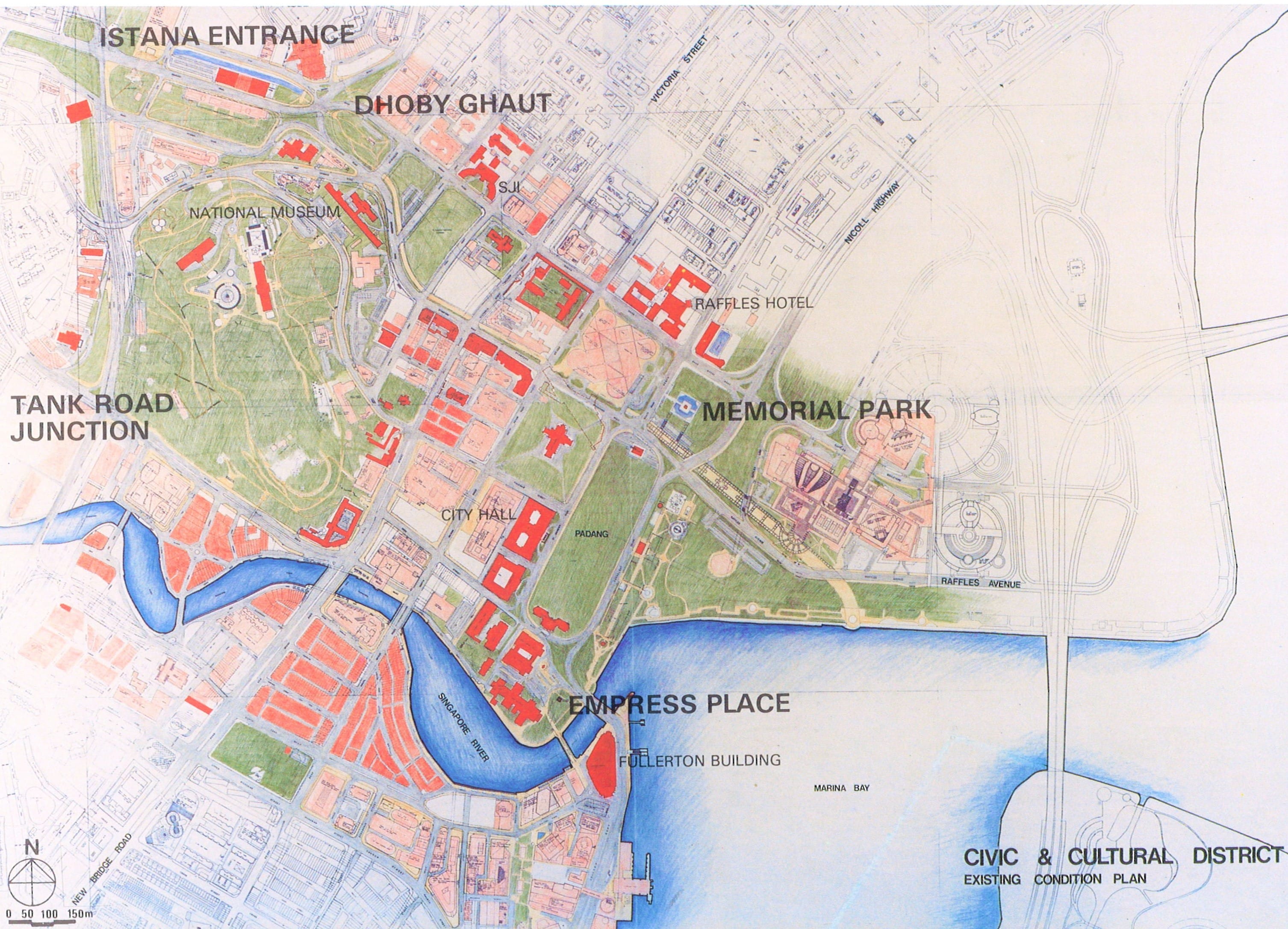
Following the release of the 1986 Conservation Master Plan, A Master Plan for the Civic and Cultural District (Call no.: RSING 711.57095957 MAS (opens in new tab)) was published in 1988. It provided guidance for the revitalisation of the historic area that housed the most important colonial government buildings such as the Supreme Court and City Hall. Bounded by the Singapore River, Clemenceau Avenue, Orchard Road, Bras Basah Road and Esplanade Park as shown in the plan above which is taken from A Master Plan for the Civic and Cultural District (p. 12), the 105-hectare area also included Fort Canning Hill. (Image Credit: Urban Redevelopment Authority (opens in new tab))
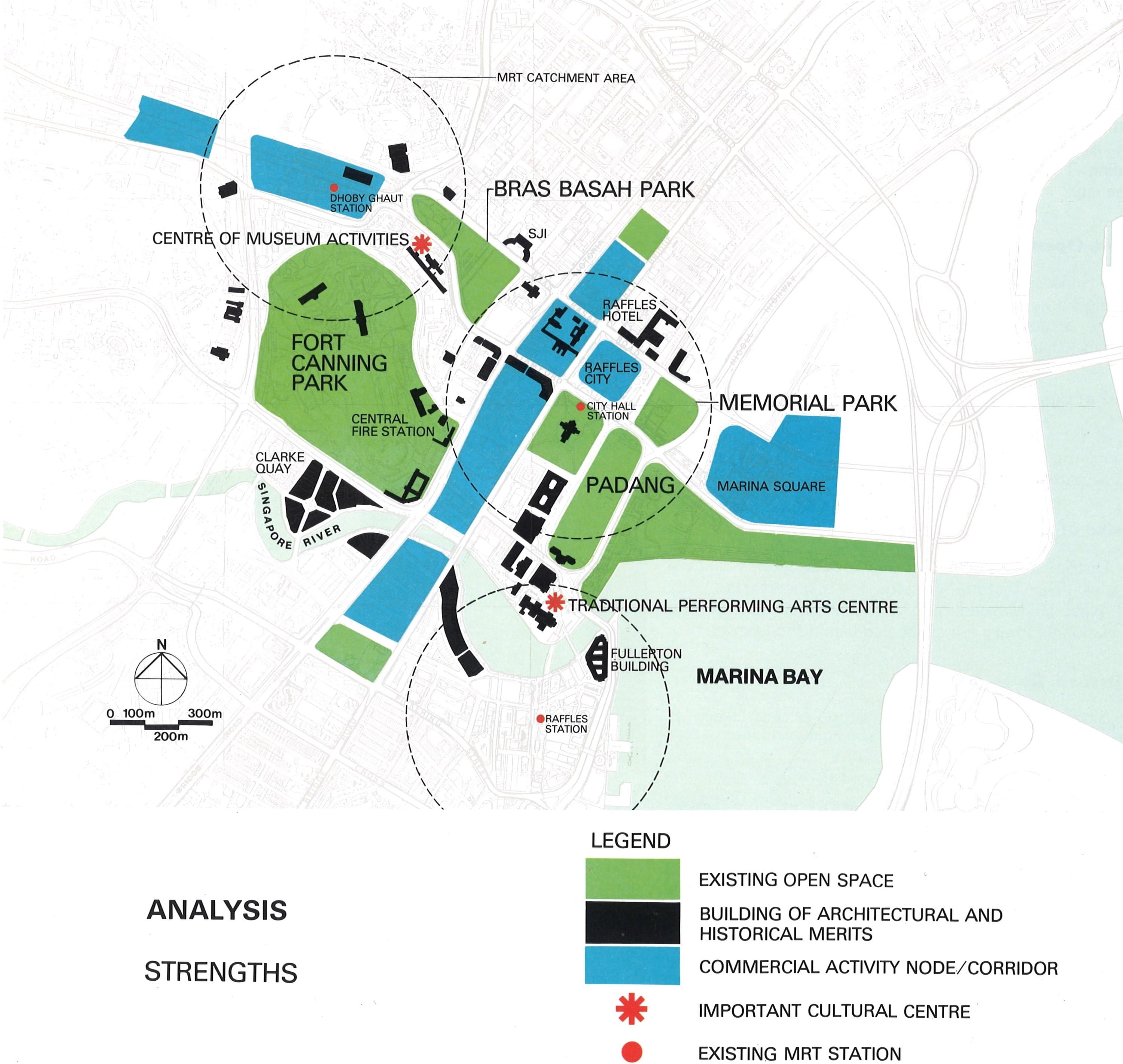
The comprehensive land use review was to enhance and revitalise the distinctive historical qualities of the area by enhancing the Civic and Cultural District’s relationship with adjacent areas such as Orchard Road, Marina Bay and the Singapore River as shown in the plan above which is taken from A Master Plan for the Civic and Cultural District (Call no.: RSING 711.57095957 MAS (opens in new tab)) (p. 6). It also aimed to transform the area into a place of culture and heritage. To do so, key cultural amenities were built up in the district over time, including several public museums housed within historic buildings such as the Singapore Art Museum, and modern cultural icons like the Esplanade Theatres. Similarly, Fort Canning Hill is now a public venue that showcases the nation’s history and plays host to performances and events. (Image Credit: Urban Redevelopment Authority (opens in new tab))

In 2019, to commemorate Singapore’s bicentennial celebrations, the showcase “From Singapore to Singaporean: The Bicentennial Experience” was launched at Fort Canning Centre. This year-long event told the history of Singapore before and after the arrival of the British in 1819. It featured a comprehensive gallery that included an indoor cinematic journey “Time Traveller”, which began with the story of the country’s evolution in the 500 years before the arrival of the British in 1819, and an outdoor exploratory trail “Pathfinder”, which featured eight interactive pavilions and installations. (Image Source: From Singapore to Singaporean: The Bicentennial Experience: Guide (opens in new tab))
The Gardens of Fort Canning Park
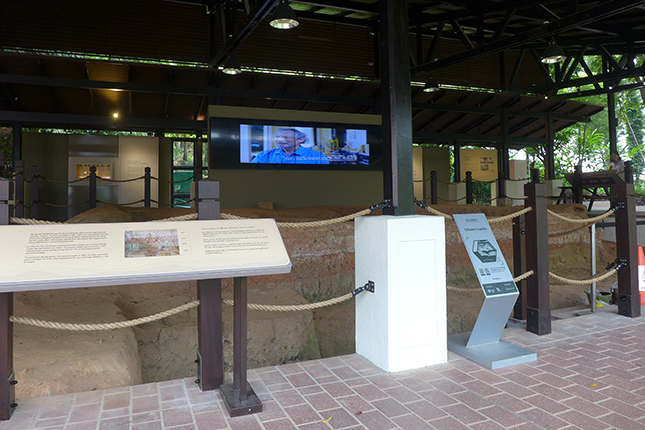
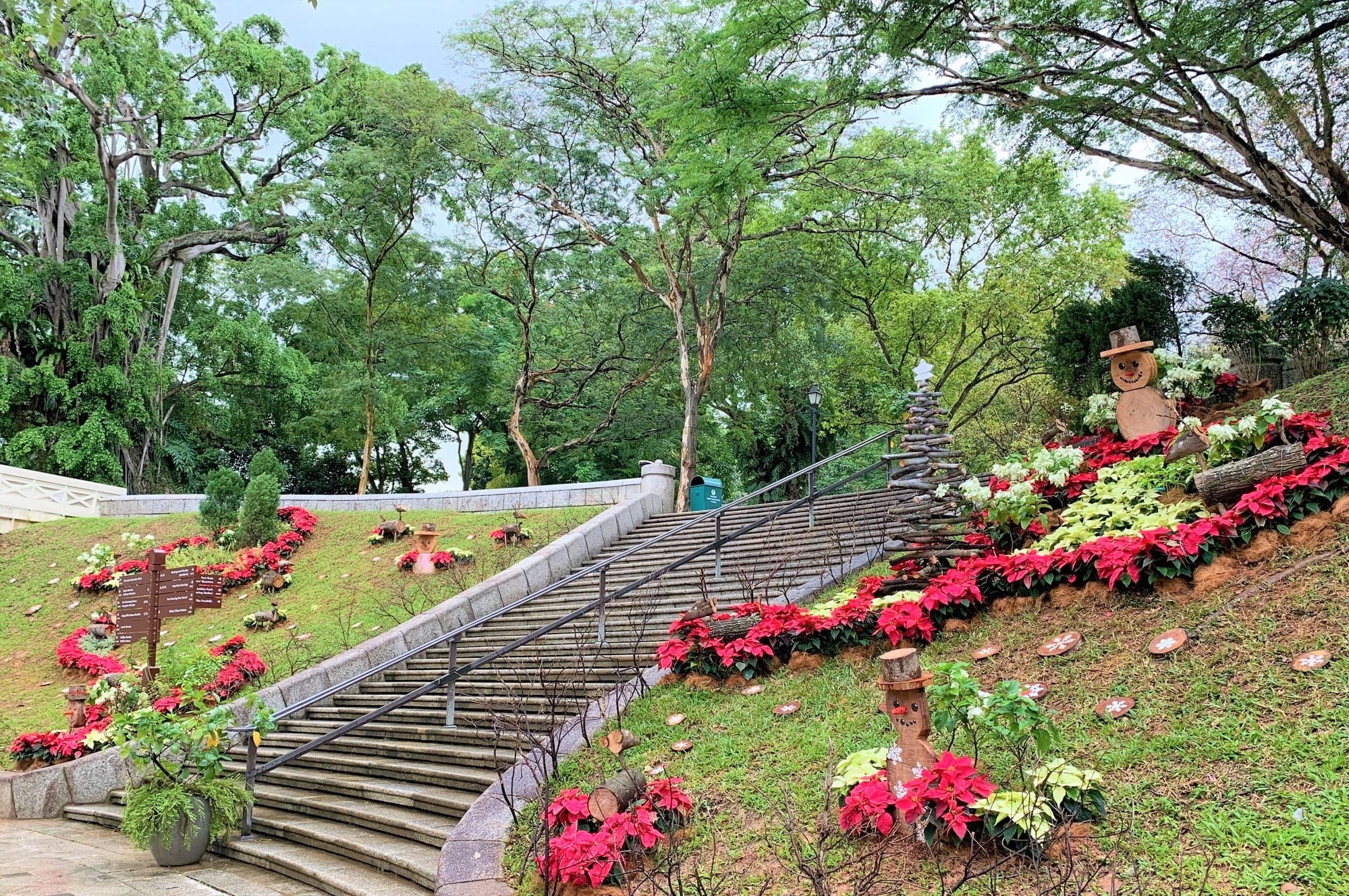
Today, Fort Canning Hill continues to be a place of learning and celebration. Following an enhancement to restore the rich history of the hill, Fort Canning Park now has nine historical gardens – the Pancur Larangan, Artisan’s Garden, Sang Nila Utama Garden, Jubilee Park, Raffles Garden, First Botanic Garden, Farquhar Garden, Spice Garden and Armenian Street Park. Built between 2018 and 2019 to commemorate Singapore’s bicentennial, these gardens provide visitors with a look into the island’s past through nature and archaeological discoveries.
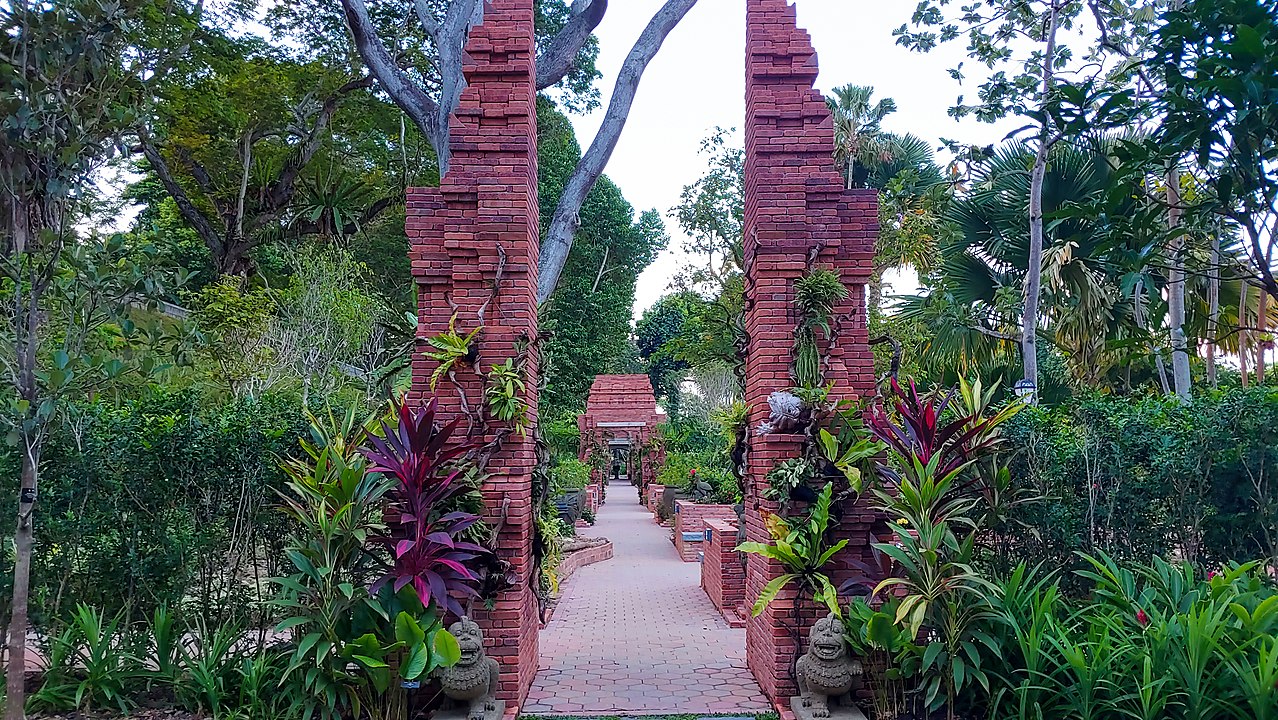
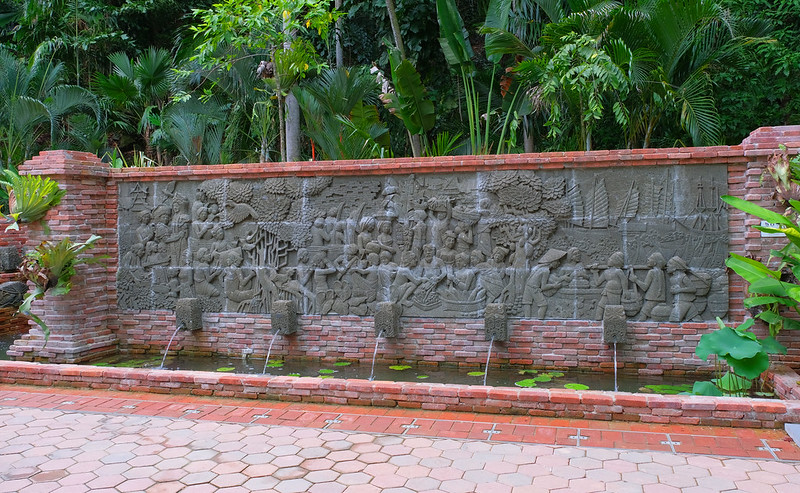
Virtual Tour of the Nine Gardens
Embark on this virtual tour with NParks to learn more about the nine gardens of Fort Canning Park.
