
Hawkers During the Colonial Period
Discover how Singapore's hawker culture evolved from unhygienic roadside stalls into organised spaces during the colonial period
Last updated 25 August 2026
During Singapore's colonial period and the early years of independence, the idea of enjoying a meal in clean hawker centres was unheard of. People usually ate by the roadside, often using dirty utensils in unhygienic conditions. The transformation into today’s hawker culture – where meals are enjoyed in centralised, clean, and organised spaces – came about through decades of effort and collaboration between the government and hawkers. This section explores this symbiotic relationship, highlighting the regulations, measures, and compromises made by both sides.
Early Hawkers
As early as the mid-19th century, there were already many street hawkers making a living on the streets of Singapore. Broadly speaking, hawkers then were broadly categorised into two distinct types: itinerant hawkers and stall hawkers. Itinerant hawkers operated on a very small scale, relying on daily sales for their livelihood. They moved from place to place, displaying and selling goods such as cooked and uncooked food, household wares, and everyday items along streets or from door to door. Stall hawkers, on the other hand, conducted their trade in public spaces by establishing fixed locations, essentially treating the streets as their storefronts.
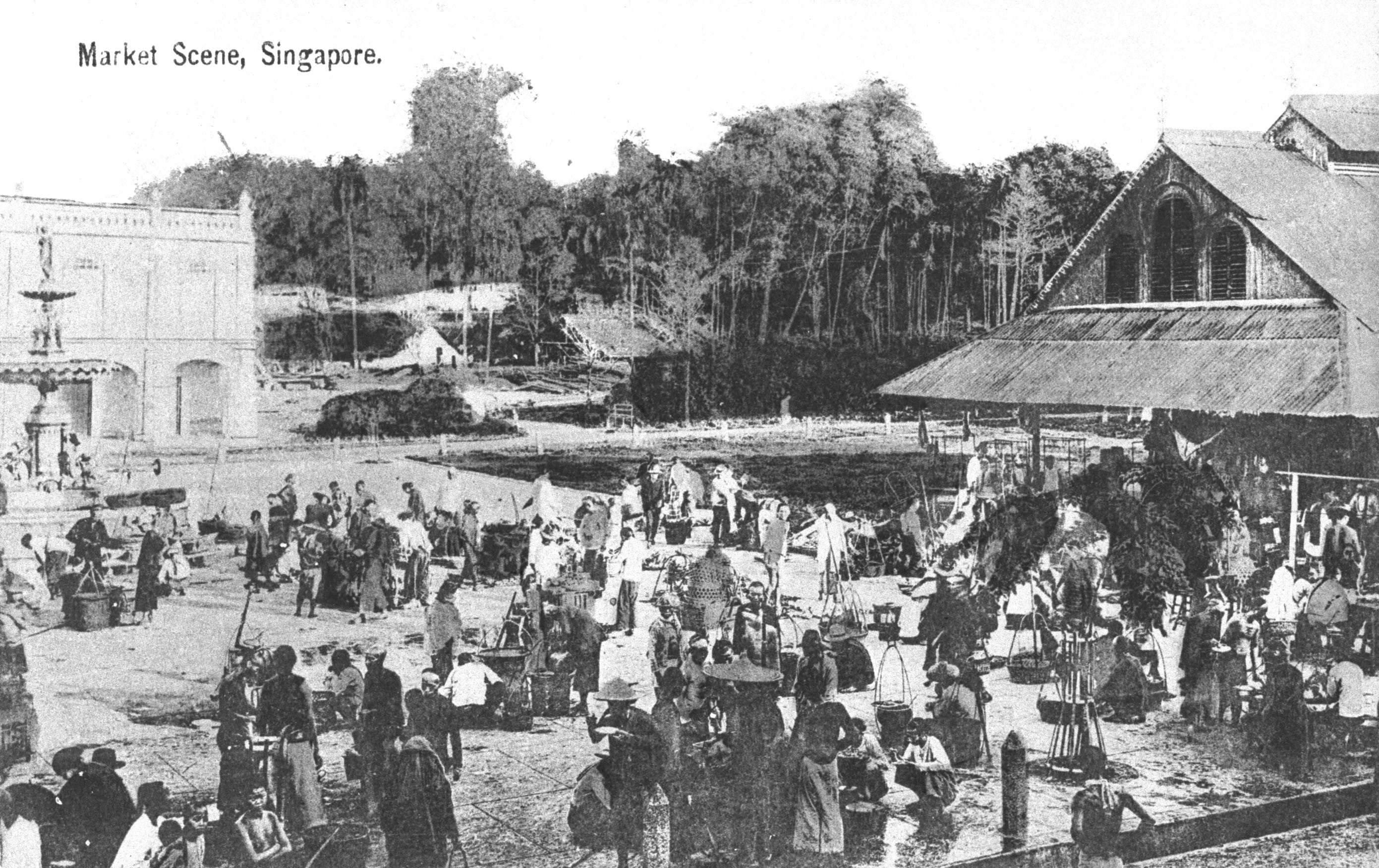
Among the various types of hawkers, food sellers made up the largest group. With few eating places in the city, these vendors provided quick and affordable meals to labourers working at the docks and warehouses, as well as office workers. Many city dwellers, who were unable to cook at home, also relied on these hawkers. Other hawkers, mostly itinerant, included small-scale farmers selling leftover crops, and street vendors commissioned by wholesalers to sell perishable goods like vegetables and fruits. Additionally, some itinerant hawkers sold everyday items like sandals and brooms, or offered services like barbering, shoe repair, and lock mending. The photograph above captures a bustling group of hawkers gathered at “Koek’s Bazaar,” located at the intersection of Orchard Road and Cuppage Road in 1905. (Image Credit: Courtesy of National Archives of Singapore (opens in new tab))
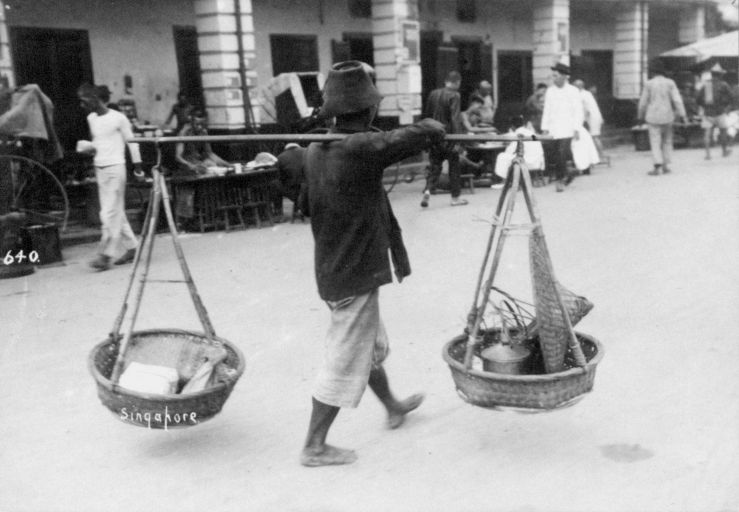
Itinerant hawkers transported their goods in a variety of ways. Some walked through the streets carrying baskets on a shoulder pole or balancing trays on their heads as shown in the 1902 photograph above. Others used barrows, bicycles, tricycles, or carts equipped with cooking tools. Soup noodle carts, for example, were designed with glass compartments to display ingredients and a cauldron with sections for soup and boiling water. Hawkers would sometimes set up at busy spots to attract more customers. (Image Credit: Courtesy of National Archives of Singapore (opens in new tab))
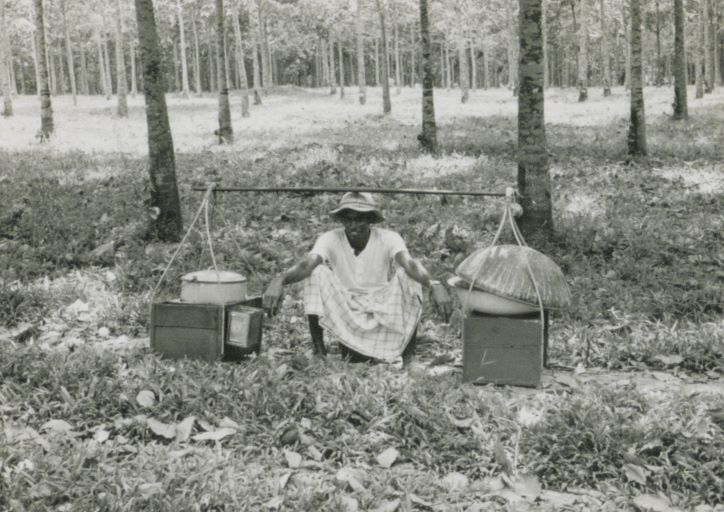
In the suburbs, itinerant hawkers brought food and other essentials right to residents’ doorsteps, adding convenience to daily life. These traveling vendors followed regular routes, and their customers were familiar with their schedules. To announce their arrival, hawkers often used sound makers like bamboo sticks or bells. The photograph above features a hawker with his goods near the former Royal Air Force camp at Chia Keng, taken around 1957/1958. (Image Credit: Derek Lehrle Collection, courtesy of National Archives of Singapore (opens in new tab))
"The hawker, they sell the food with two baskets with a bamboo pole. One in front, one at the back. That is our eating shop...And you know what’s our market? We have no market. Our market is again the hawker market. He comes round with two baskets of vegetables and fruit and whatever."— Before the days of hawker centres, businessman Foo Kee Seng recalls the travelling hawkers and how they sold food and produce to the residents of Katong during the pre-war years. (Source: National Archives of Singapore)
Hawker Food and Ethnicity
The diverse communities of Singapore played a major role in shaping the city’s hawker culture. Each group brought its own unique flavours, trades, and traditions to the streets, creating a vibrant tapestry of hawkers that catered to all.
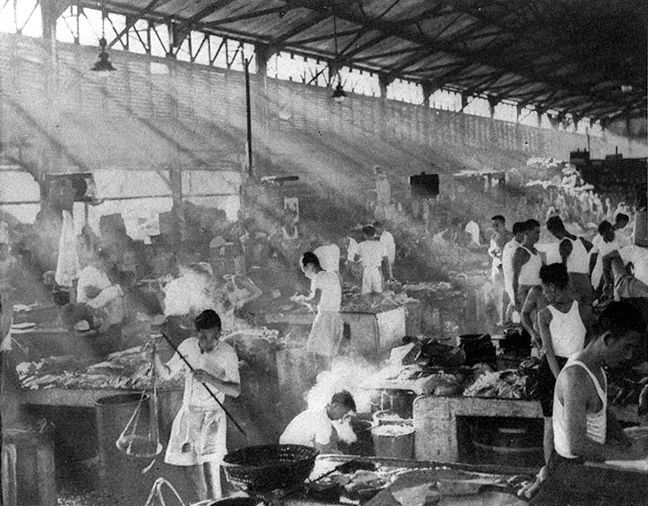
The Hokkiens were the largest group of Chinese hawkers and could be found throughout the city, especially in Chinatown. They typically sold coffee and cooked food, while some vegetables they grew. The Teochews, on the other hand, made up about a quarter of the Chinese hawkers, selling cooked food, fresh fish, and pork, but they were especially known for selling fruits and vegetables. They operated as a network of wholesalers and peddlers, dominating the fruit and vegetable trade between China and Singapore. They even had their own association, headquartered near Ellenborough Market. The photograph above shows Ellenborough Market as it appeared in 1953. (Image Credit: Ministry of Culture Collection, courtesy of National Archives of Singapore (opens in new tab))
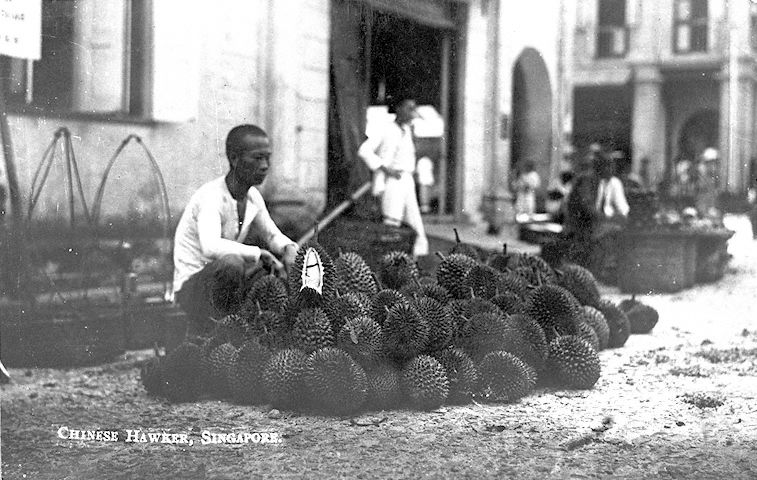
Cantonese hawkers were mainly found in areas like People’s Park, Kreta Ayer, and Jalan Besar, selling a range of goods such as food, vegetables, clothes, toys, and cigarettes. They also controlled the supply of vegetables from farms in Balestier, as well as mangosteens and durians from Malaya. The Hockchias and Hockchius mainly ran night stalls along Queen Street and Johore Road, where many rickshaw pullers lived. They were well-organised and had their own association, the Hockchia Coffee Stall Keepers Guild, which regulated their trade. The Shanghainese were mainly itinerant traders, buying silk from Chinese ports and selling it in markets across Singapore, Indonesia, and India. The photograph above shows a hawker selling durians, taken in the 1920s. (Image Credit: Courtesy of National Archives of Singapore (opens in new tab))
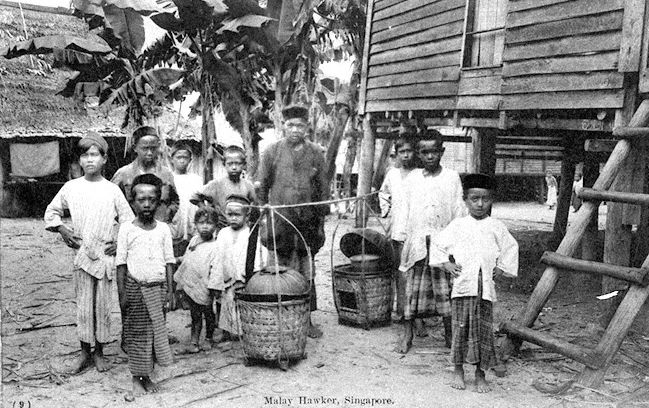
Malay and Javanese hawkers were mostly found in the small lanes around Middle Road, selling satay, kueh (cakes), curios, and cloth. Indian food hawkers were common at street corners, near schools, football fields, and toddy shops during midday and tiffin hours. They sold snacks and drinks like Indian rojak, mee goreng, vadai, muruku, kachang puteh, goat’s milk, and yoghurt. North Indian Muslim hawkers were known for their tea, ginger water, and buns, which they carried in tall tin cans. One of the most popular with schoolchildren was the ice-water seller, who sold ice balls coated with syrup. The photograph above captures a Malay kueh hawker with a group of Malay boys, taken around 1911, offering a glimpse of daily life in early Singapore. (Image Credit: Courtesy of National Archives of Singapore (opens in new tab))
"There is probably no city in the world with such a motley crowd of itinerant vendors of wares, fruits, cakes, vegetables. There are Malays, generally with fruit, Chinamen with a mixture of all sorts, and Klings with cakes and different kinds of nuts. Malays and Chinamen always use the shoulder-stick, having equally-balanced loads suspended at either end; the Klings, on the contrary, carry their wares on the head on trays. The travelling cook shops of the Chinese are probably the most extraordinary of the things that are carried about this way. They are suspended on one of the common shoulder-sticks, and consist of a box on one side and a basket on the other, the former containing a fire and small copper cauldron for soup, the latter loaded with rice, vermicelli, cakes, jellies, and condiments."— The multi-ethnicity of Singapore's local hawker scene is not something recent but has been going on since the early colonial period. This is vividly captured by John Cameron in Our Tropical Possessions in Malayan India (1865) (Call no.: RRARE 959.5 CAM-[JSB]; Accession no.: B29032445G)
The Hawker Question
The presence of roadside hawkers (both itinerant and stall), combined with their poor hygiene practices, posed significant challenges to the health and safety of road users, pedestrians, and diners. While the authorities aimed to regulate hawkers to address these issues, they faced the difficult balance of disrupting the hawkers’ livelihoods and limiting the public’s access to affordable food — proving that the “Hawker Question”, as the colonial authorities called it, was not easy to resolve.
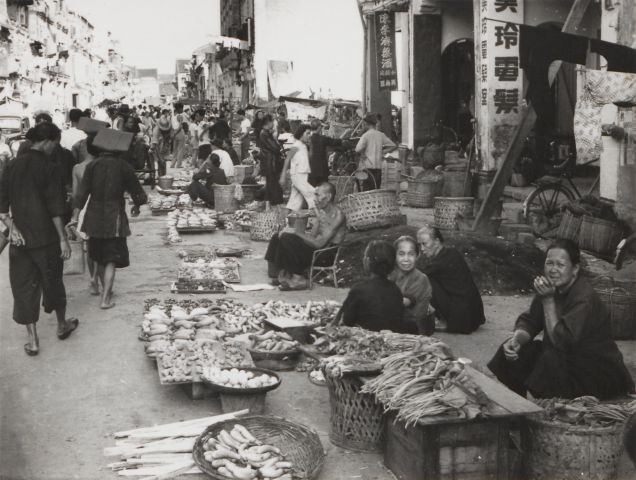
By blocking roads and five-foot ways, hawkers not only created noise and mess but also frustrated both road users and pedestrians as they had to manoeuvre around them. Shophouse owners, particularly coffee shops and food shops, were also unhappy with the unlicensed hawkers. The owners complained that they faced unfair competition from these hawkers because the latter could operate at lower costs without paying rent or licence fees, and would deliberately set up stalls near the entrance or opposite their shops. The photograph above, taken in the 1950s, depicts a bustling roadside market with hawkers selling vegetables and other produce along Upper Chin Chew Street, just before South Bridge Road in Chinatown. (Image Credit: Arthur B Reich Collection, courtesy of National Archives of Singapore (opens in new tab))
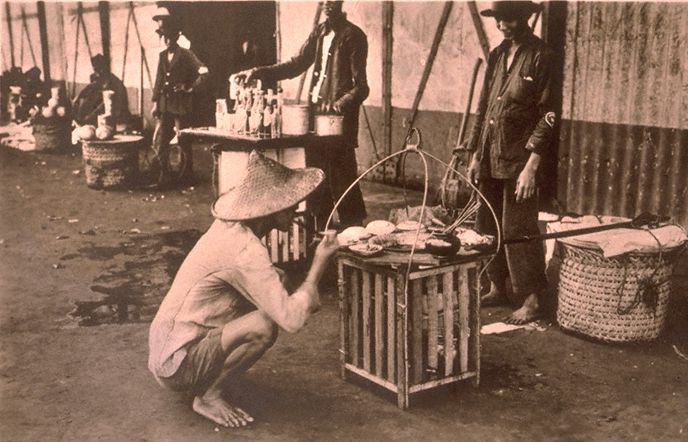
The most serious concern, however, was the public health risk. Hawkers were seen as potential sources of disease outbreaks, such as cholera and typhoid, due to their unhygienic practices. These included the use of untreated water for food preparation and the unsanitary conditions where they set up their stalls. In fact, it was common to find cockroaches and vermin near some stalls. Yet, despite these risks, many diners remained indifferent, continuing to enjoy hawker food near the stalls as shown in this 1920s photograph above because of its affordability and convenience. (Image Credit: Courtesy of National Archives of Singapore (opens in new tab))
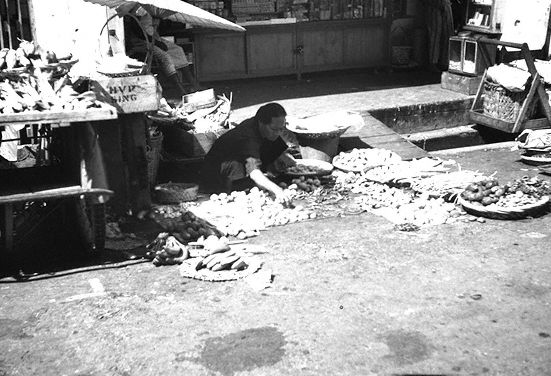
In response, the colonial government decided in 1903 that hawkers should be registered and licensed. To avoid harming hawkers’ livelihoods or depriving the public of affordable food, these regulations were introduced gradually. The first set of laws was enforced in 1907 for night hawkers, and by 1919, they were extended to include day and itinerant hawkers. Through licensing, the government sought to control the number of hawkers, regulate their operating hours and locations. The photograph above, taken in 1954, shows a hawker selling vegetables by the roadside. (Image Credit: Ministry of Information and the Arts Collection, courtesy of National Archives of Singapore (opens in new tab))
A satay hawker had a pot of gravy, into which practically every customer dipped two or three times with the same stick. The sticks had been in their mouths a number of times. A hawker selling a Cantonese meal of roast pork, duck, entrails and rice was squatting near a stinking drain, while cutting the food stuffs. Flies flew about him…In some shops, food was stale and others sold pieces of meat left over by customers. A mee seller wiped perspiration from his body with his hands and then handled food. Some hawkers were seen buying rotten vegetables from street urchins who had salvaged the foodstuffs from dustbins. Many hawkers spat and rubbed their hands on their mouths and then served customers.— A 1957 Singapore Free Press article describing how unhygienic the experience of eating hawker food by the roadside. (Source: NewspaperSG)
Hawker Shelters and Markets
From the 1920s, the colonial government began to build hawker shelters in places like Telok Ayer Market/Finlayson Green (1921), People’s Park (1923), Carnie Street (1929), Queen Street (1929), Balestier Road (1929), Lim Tua Tow Road (1955), MacPherson Road (1955), Seng Poh Road (1951) and Esplanade (1952). These shelters were basic structures with a roof and proper flooring. Some of them, especially those built after the war, also had a wet market. Regardless of its form, the aim of these shelters was to provide diners with a proper place to eat and give cooked food hawkers a designated space where they could set up stalls, access clean water, prepare food and wash utensils. By moving hawkers into these shelters, the authorities could take them off the streets and manage hygiene more effectively through regular cleaning.
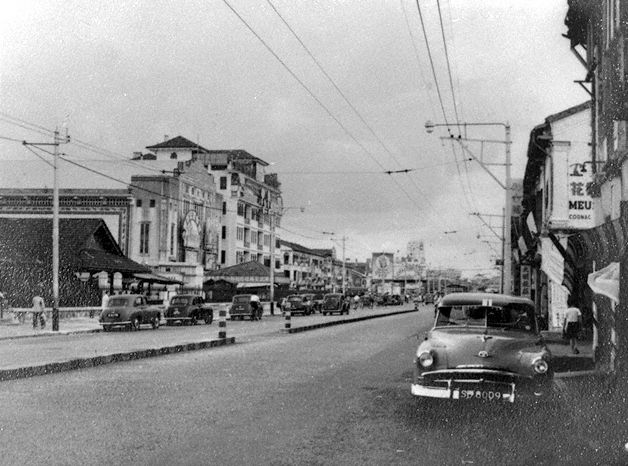
One of the more notable hawker shelters before the war was located at People’s Park, a public park near Pearl’s Hill in Chinatown. Established in 1923, it quickly gained popularity, and by 1930, it was expanded to include a market to become a market-cum-hawkers shelter. The People’s Park Market (or Pearl’s Market), as it called then, continued to grow, and by 1940, it over 300 stalls, making it the largest in Singapore at the time. However, in December 1966, a devastating fire destroyed 186 stalls and shops, causing over a million dollars in damages. This event hastened the government’s urban renewal plans, leading to the rebuilding of the People’s Park Market into the People’s Park Complex across the street. The photograph above, taken in 1965, shows Eu Tong Sen Street. The first building on the left with the dark-colored roof is the People’s Park Market. (Image Credit: Wong Kwan Collection, courtesy of National Archives of Singapore (opens in new tab))
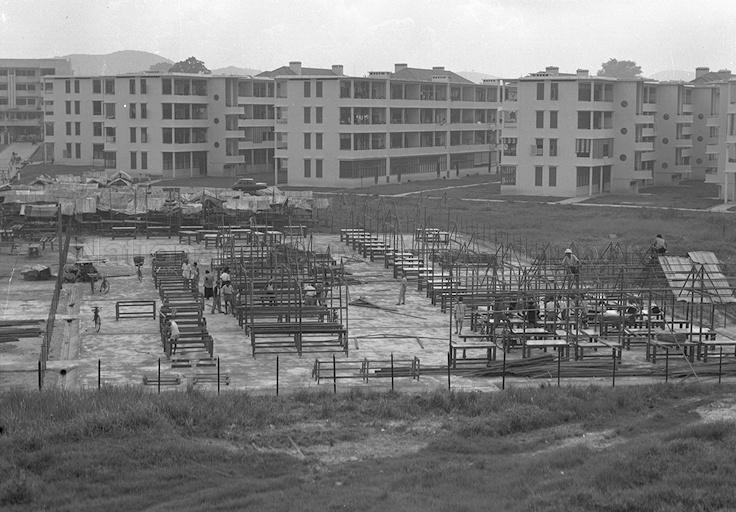
Seng Poh Road Market, located at the junction of Seng Poh Road and Lim Liak Street, adjacent to the iconic Art Deco Lim Liak Street flats in Tiong Bahru, served as both a market and a hawker shelter. This “experimental” venture featured an open hawker shelter that accommodated local produce sales during the day and cooked food at night. Additionally, it had an enclosed area that functioned as a wet market by day and a cooked food section by night. In 1993, the market and hawker shelter were renovated and renamed Tiong Bahru Market, before being fully replaced by the current Tiong Bahru Market in 2006. The photograph above shows Seng Poh Market under construction in 1950. (Image Credit: Courtesy of National Archives of Singapore (opens in new tab))
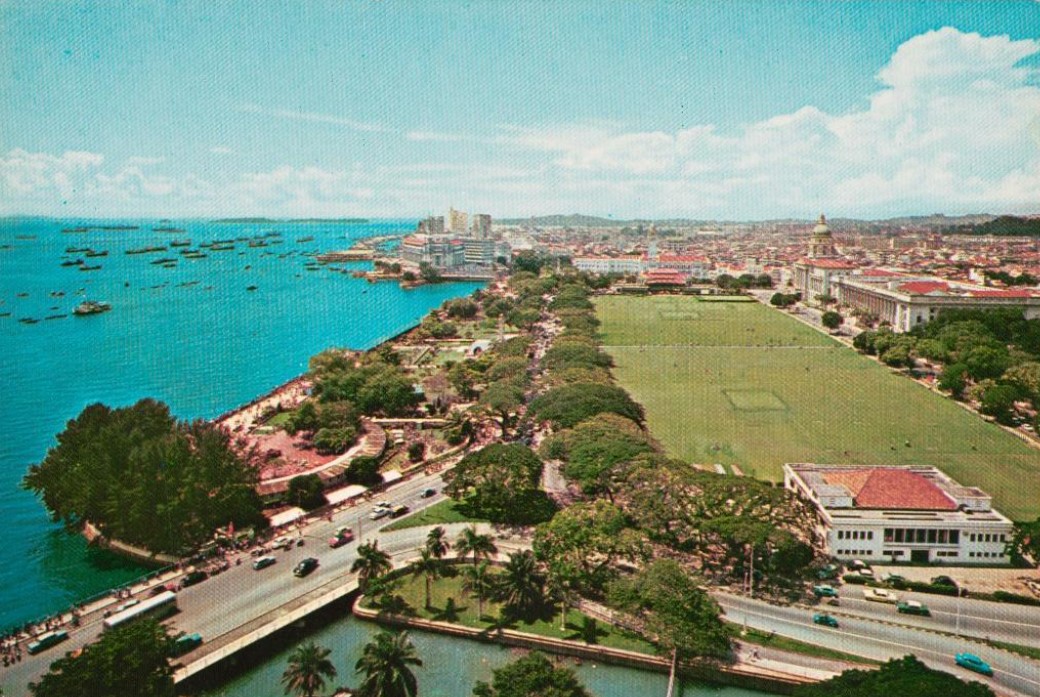
Among the hawker shelters built during the colonial period, the most picturesque was the Esplanade hawker shelter, also known as “Esplanade Restaurant”. It was located along the Esplanade waterfront, at the end of Queen Elizabeth Walk where it met Stamford Canal. Compared to the existing hawker shelters at the time, the Esplanade shelter had a distinct architecture, featuring a crescent-shaped building for hawkers to set up their stalls. Diners were seated facing the stalls, and provided with proper deck chairs and tables as well as a breath-taking view of the Esplanade seafront. In 1971, the food options there was expanded when the Satay Club moved in to join the existing hawkers. Both the hawkers and the Satay Club at the Esplanade would remain there until their site was demolished in 1994 to make way for Esplanade Theatres by the Bay. The crescent-shaped Esplanade hawker shelter, also known as the “Esplanade Restaurant,” is visible in the left corner of this 1960s aerial photograph of the Esplanade and the Padang. (Image Credit: Courtesy of the National Museum of Singapore, National Heritage Board (opens in new tab))
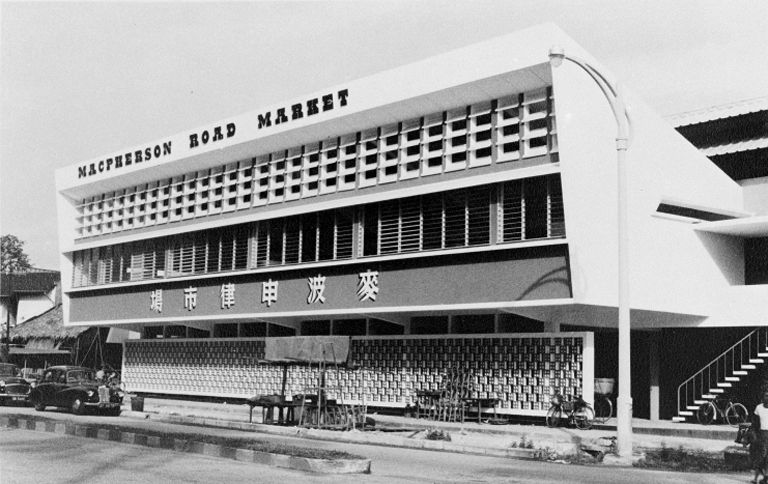
Besides the Esplanade hawker shelter, there were also others that carried unique architectural design such as the MacPherson Road Market (shown above). Located at the junction of MacPherson Road and Tai Thong Crescent, the market-cum-hawker shelter, opened in 1955, was designed by Gordon Dowsett of Iversen, van Sitteren and Partners. It had two floors and could accommodate about 200 stall, with the market and food hawkers on the ground floor, while the top was for the sale of non-perishable goods. The market also had a 4,000 cubic feet refrigeration room on the ground floor, and was painted with variegated colours in the interior to brighten it at the time of its opening. The market was very popular among the residents of Sennet Estate, MacPherson Road and Upper Serangoon Road, and was congested with open-air pasar malam stalls around it during its heydays. The market closed down in 1990 for renovation before re-opening as a 24-hour coffeeshop in 1991 and was renamed as Jackson Centre before it was closed down again in 2007 to make way for a tunnel. (Image Credit: Tan Kok Kheng Collection, courtesy of National Archives of Singapore (opens in new tab))
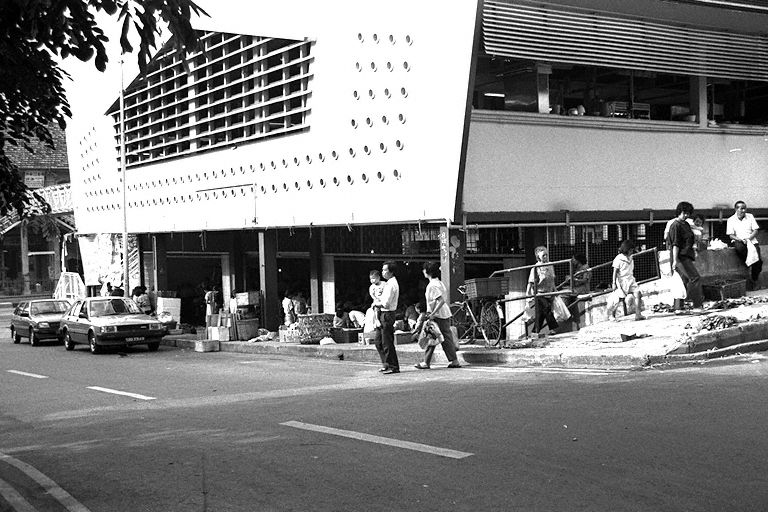
In the 1950s, a new municipal market housing hawker stalls was built at Lim Tua Tow Road to serve the residents living around the 5th milestone (or the junction of Lim Tua Tow Road and Teck Chye Terrace) in Hougang. This market also had a unique architecture. It was a rectangular block with a pentagon-shaped exterior walls riddled with circular potholes on each side. To diners who frequented there, the market was said to be famed for its fried carrot cake and Hokkien mee (fried noodles with prawn). The market had since been demolished to make way for development in the 1980s. (Image Credit: Courtesy of National Archives of Singapore (opens in new tab))
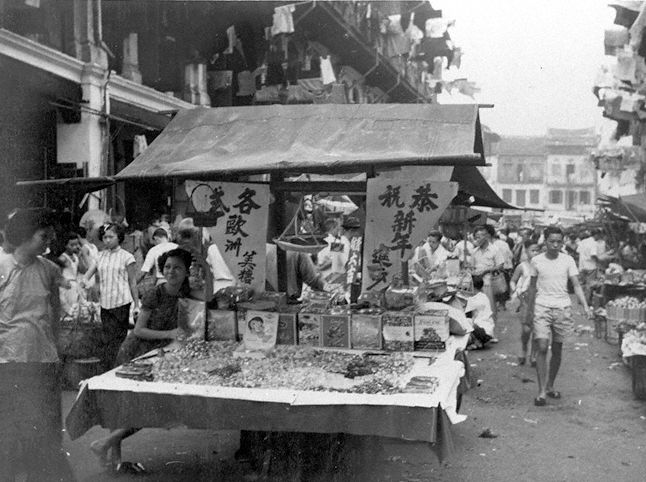
The building of hawker shelters reduced the total number of unlicensed roadside hawkers from 11,249 in 1919 to 5,513 in 1929. But in reality, little progress was made in tackling hawker issue as the efforts during the prewar years were summed up by the municipality as “a vain hope” as major roads in the town were still cluttered with unlicensed hawkers. By 1950, due to the lack of a decisive policy against unlicensed hawkers as well as the high unemployment rate during the postwar years, the number of such hawkers ballooned to 20,000, thus magnifying the various problems with them and once again led to calls for their eradication from the streets. This 1955 photograph of Sago Lane captures the chaotic environment created by street hawkers. (Image Credit: Wong Kwan Collection, courtesy of National Archives of Singapore (opens in new tab))
This provision of hawkers’ shelters should be extended, and many others set apart in the town. The convenience to the large body of clerks and tambies who work in the town by day and trust to the food hawkers for their mid-day meals, and often for others, added to the greater cleanliness, would at least do something to mitigate the present evil practice of squatting in the five-foot way, in close proximity to a drain, and there consuming eatables that have been dressed and cooked in the dust-laden air, carried about openly to be infected by any air borne disease germ or filth, and then consumed under such unappetising and dangerous to health conditions. There already exist several small areas where food stalls are set up…We would like to see the number of these increased…and many plain sheds built, with a supply of clean water provided. Nothing in the way of a permanency should be allowed to be in the eating shed, and during the night, the clear concrete floor should be swept and washed down ready for the next day’s ingress of hawkers. The conditions of eating even then would not be ideal, but they would be far better than at present.— The Municipal Commission's explanation on why moving hawkers from the streets to shelters improve hygiene. From the Singapore Free Press, 3 March 1919.
The “Hawker Question” Persists
In April 1950, a 10-member Hawker Inquiry Commission was formed to address the social, economic, and health challenges posed by unlicensed street hawkers. The commission’s final report, released in September 1950 recommended new policies, including a licensing scheme to regulate hawkers, manage their operating areas, and ensure better hygiene. Cooked-food hawkers were also required to undergo medical examinations and vaccinations. However, the commission recognised that hawking was a legitimate form of employment that provided affordable food for the working class, rather than a public nuisance.
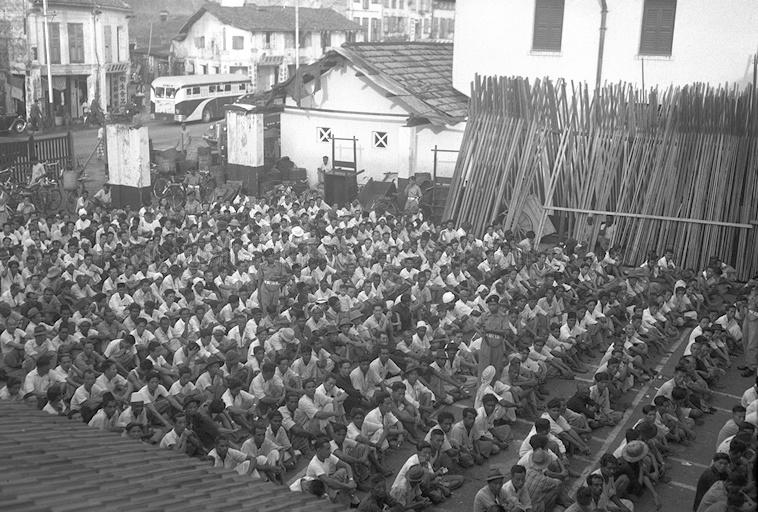
To support the licensing scheme, the commission recommended appointing staff to handle the issuing of licenses and a team of Hawker Inspectors to ensure compliance with license conditions. Additionally, it also proposed establishing a Hawker Court and a Hawker Advisory Board to oversee policy development, licensing procedures, and to address grievances from hawkers. Importantly, the commission advocated for hawkers to operate in designated shelters rather than on the streets, urging the government to build more shelters with essential facilities such as refuse bins, clean water, hot water, and gas pipes. This photograph captures a large crowd of hawkers at the Havelock Road licensing centre in 1952. (Image Credit: Courtesy of Singapore Press Holdings (opens in new tab))
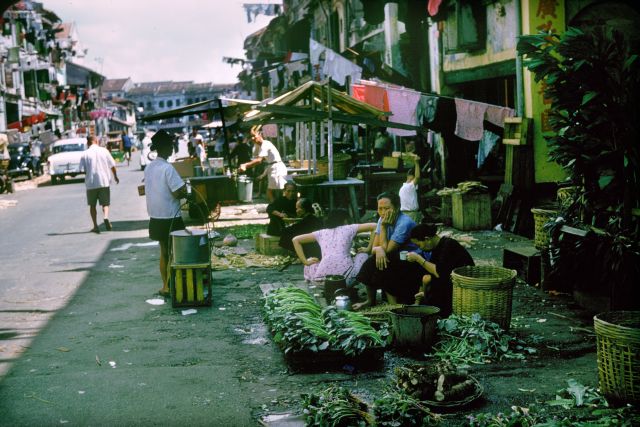
Despite the recommendations, the colonial administration struggled to resolve the hawker problem. By 1959, the number of illegal hawkers had surged to over 30,000, and unhygienic food practices and filthy operating conditions persisted. Several factors contributed to this failure. First, the government was slow to implement the licensing scheme, which came into effect three years after the commission’s report, with a proper Markets and Hawkers Department only set up in 1957. Additionally, there were also far too few inspectors — only 16 in 1958 to monitor the 30,000 hawkers in Singapore. Perhaps the biggest challenge was the lack of cooperation from hawkers, fueled by the government’s aggressive crackdown on unlicensed vendors. Daily raids, carried out by the Town Cleansing Department and police, led to widespread resentment and defiance among hawkers. Many resorted to bribing officials or seeking protection from secret societies and gangs to continue operating. This color photograph from the 1950s captures hawkers selling groceries along Upper Chin Chew Street in Chinatown.(Image Credit: Arthur B Reich Collection, courtesy of National Archives of Singapore (opens in new tab))
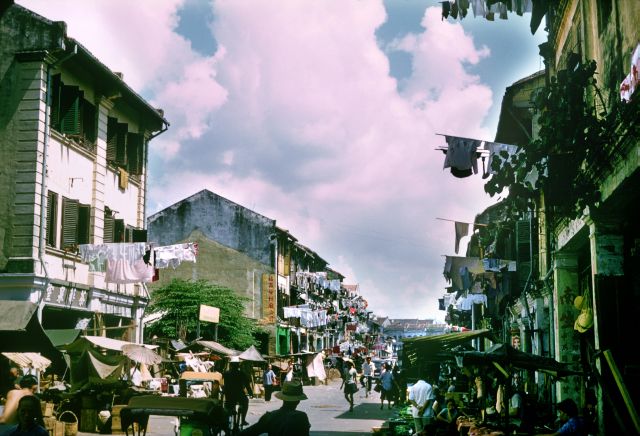
The Hawkers’ Union, supporting the hawkers, proposed that instead of punishing them, a better approach would be to collaborate with them. They suggested preserving their livelihood by building more shelters where hawkers could continue their trade legally. During the 1950s, some hawkers even formed syndicates to purchase land and construct markets and hawker shelters in areas like Somerset Road, Sennett Estate, Mackenzie Road, and Serangoon Road. However, this bold initiative failed to inspire a similar response from the authorities, and illegal hawker stalls, along with mass raids, persisted. It was only after Singapore gained independence in 1965 that the government made a serious, coordinated effort to address the hawker problem. This 1950s colour photograph captures Upper Chin Chew Street, where hawkers line the roadside and laundry is hung on bamboo poles overhead. (Image Credit: Arthur B Reich Collection, courtesy of National Archives of Singapore (opens in new tab))
Markets and Hawker Shelters of the Colonial Period
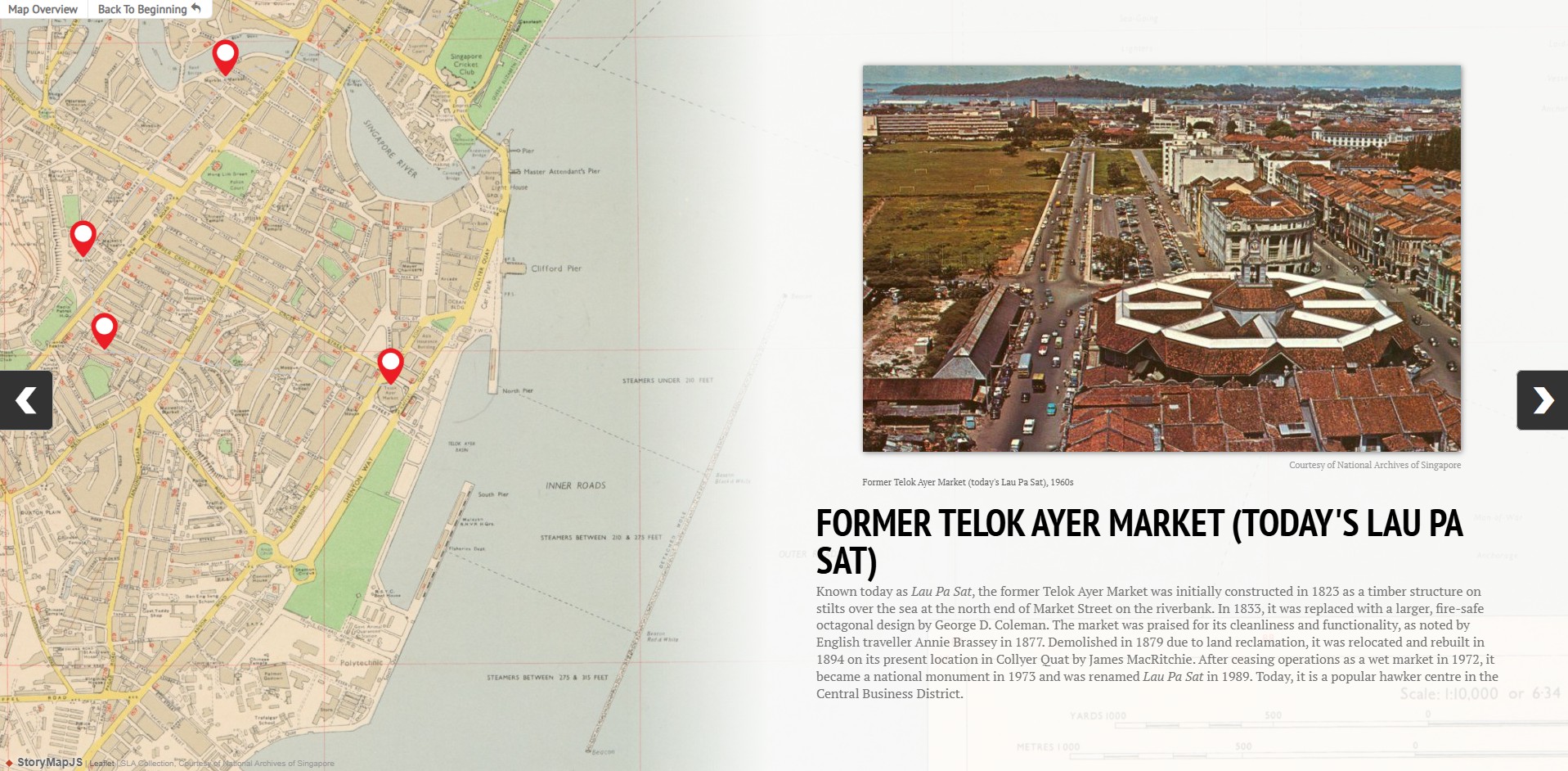
In the 1950s, pre-independence Singapore grappled with the challenges of a burgeoning street food scene. While hawkers provided essential and affordable meals, their unregulated presence posed concerns about hygiene and public order. This era saw the beginnings of efforts to organise and manage street food vendors with the building of hawker shelters and markets with eating spaces to house them. This foreshadows the more structured approach to hawker centers that would emerge in the nation-building years to come. Visit the story map below to see some of the markets and hawker shelters of the colonial period.
Click the button below to continue or return to the previous page
References
Click the following PDF icon to view and download the reference list used for this page: Hawkers During the Colonial Period References [PDF, 594.21 KB] (opens in new tab)