
Hawkers After Independence
Discover how Singapore tackled its hawker problem after independence, from licensing rules to purpose-built hawker centres that shaped the nation's food culture
Last updated 25 August 2026
Licensing Hawkers
Following independence, the government tackled the hawker issue through measures like the 1966 Hawkers' Code, which introduced licensing regulations and restricted hawking in congested areas. Licensed hawkers were relocated to less busy sites, while a special squad conducted raids to remove illegal vendors, encouraging able-bodied individuals to seek alternative employment.
[T]he proposed implementation of the new Hawkers' Code, which will be announced sometime in February [1966], and the licensing of hawkers from 1st of March [1966]… [are] the first step towards the control of hawkers in Singapore. As indicated, the five new markets that will be built next year will probably only provide something like 500 stalls for hawkers. So it is impossible to give an answer that the licensing of 40,000 to 50,000 hawkers can therefore be solved by building five markets next year. What is intended in the long-term plan for hawkers is to get them into permanent premises to conduct their business, that is to say, either in Government-built markets or private markets or inside shop-houses. It will take some years before it can become effective, but the new Hawkers' Code will provide a temporary solution to get hawkers off the main streets. In fact, hawkers will be prohibited from plying their trade along bus routes. At the present moment, we see too many hawkers crowding themselves around bus stops, and even at pasar malams, with their wares displayed inside bus-stop shelters, which is ridiculous.— Addressing Parliament on 30 December 1965, Minister for Health Yong Nyuk Lin painted explained the challenges the government faced in solving the hawkers problem. (Source: Parliament of Singapore)
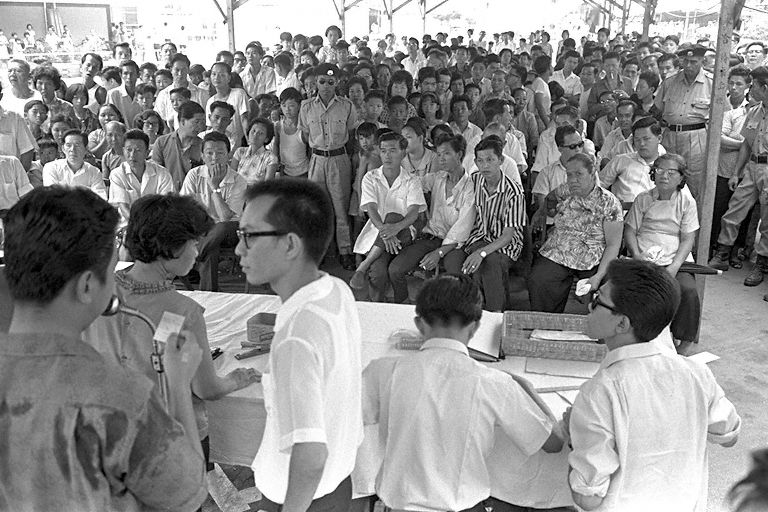
In the years following independence, the government’s efforts to tackle the hawker issue were spearheaded by Minister for Health Yong Nyuk Lin. Recognising that there was an urgent need to resolve the issue, Yong announced in December 1965 that the first step was to start licensing all hawkers and implement a Hawkers’ Code by early 1966. Under the code, only Singaporeans could obtain a hawker licence, and hawkers were prohibited from operating on busy streets, in daytime car parks, near bus stops, schools, or other public buildings. These measures allowed the government to ascertain that the number of street hawkers at the time stood at around 24,000, much lower than the initial estimation of close to 50,000 hawkers. The photograph above shows registered hawkers participating in a ballot to secure stalls at Bukit Ho Swee in 1966. (Image Credit: Ministry of Information and the Arts Collection, courtesy of National Archives of Singapore (opens in new tab))
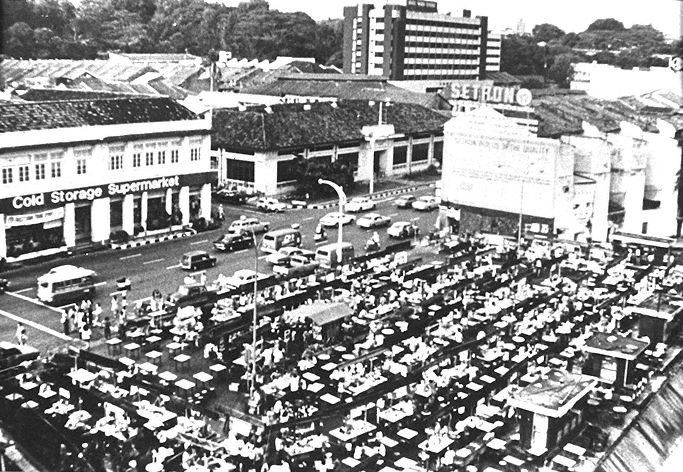
After registering the street hawkers, the next step was to move them to permanent premises or hawker centres. As it would take time to build these premises, the government started by relocating street hawkers from main roads to less congested such as back lanes, side streets, vacant lots, or car parks. One of the most notable car parks used as a hawker site was the Orchard Road car park, later known as Glutton’s Square. The relocation process needed to be handled with care, and Members of Parliament, along with grassroots leaders, were involved in addressing the concerns and grievances of the displaced hawkers. The photograph above, taken in 1970, shows the hawker stalls at the old Glutton’s Square, located opposite Cold Storage (now Centrepoint) on Orchard Road. (Image Credit: Courtesy of National Archives of Singapore (opens in new tab))
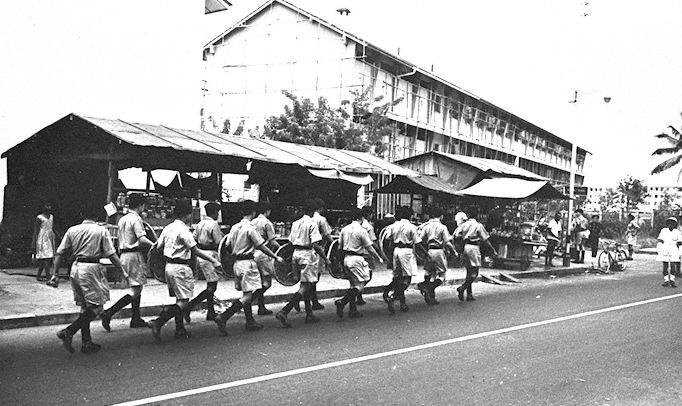
A special squad was established to handle illegal hawkers, conducting street raids alongside auxiliary police officers to remove unlicensed vendors. Offenders were fined and then referred to the Ministry of Labour for job placement. With growing confidence from economic progress and job creation, the Hawkers Department stopped issuing new hawker licenses to able-bodied individuals, especially those under 40, to encourage them to pursue alternative employment opportunities. The above is a 1962 photograph showing a group of policemen arriving to oversee the demolition of hawker stalls at Margaret Drive. (Image Credit: Courtesy of National Archives of Singapore (opens in new tab))
I remember during raids in Boon Keng Road side…there are a lot of illegal hawkers [there] especially during lunch time. So we have to organise raids. Because they are in large numbers, they become brave, they’re not afraid of us. So we got to get police escort…just to see that we are not attacked by these people. We have to do a very fast job. The moment we reach there, of course they’ve got look-out, they saw us, they would disperse very fast. But somehow or rather there are a few slow hawkers who dd not run away in time…And when we came near them, some of them will fight with us and [become] very aggressive…[T]hey would not want us to seize their goods because it cost them money and their livelihood.— The raiding of illegal hawkers was not an easy job for authorities as it involved threatening someone's livelihood. As a result, some hawkers would react aggressively to these raids as Philip Chew Peng Kia, who was a Public Health Inspector during the 1970s, remembered in his oral history interview on 26 April 1999. (Source: National Archives of Singapore)
Building Hawker Centres
During the 1970s, the Hawker Centres Development Committee and later the Ministry of Environment were task to spearhead the building of hawker centres and the relocation of street hawkers into such premises. Despite being a mammoth task, it was completed in 1986 which saw some 18,000 street hawkers being moved to more than 110 hawker centres across Singapore.
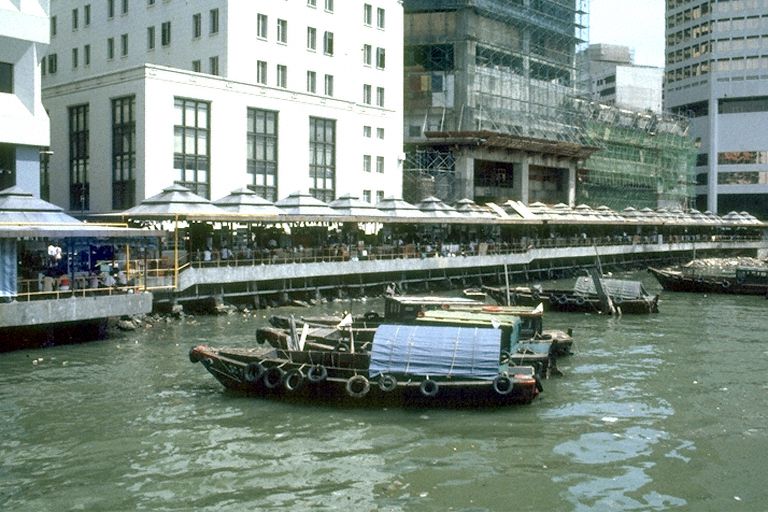
The Hawker Centres Development Committee was established in 1971 to oversee the creation of new hawker centres. They selected locations that were easily accessible to the public and offered good business potential for hawkers. To ensure affordability, rental fees at these centres were kept low so that hawkers would not need to increase their food prices after relocating. Among the first hawker centres built were the 110-stall Collyer Quay centre, the 80-stall Boat Quay centre, and the Yung Sheng Road hawker centre in Jurong. The photograph above, taken in 1976, shows the former Boat Quay Food Centre. (Image Credit: Courtesy of National Archives of Singapore (opens in new tab))
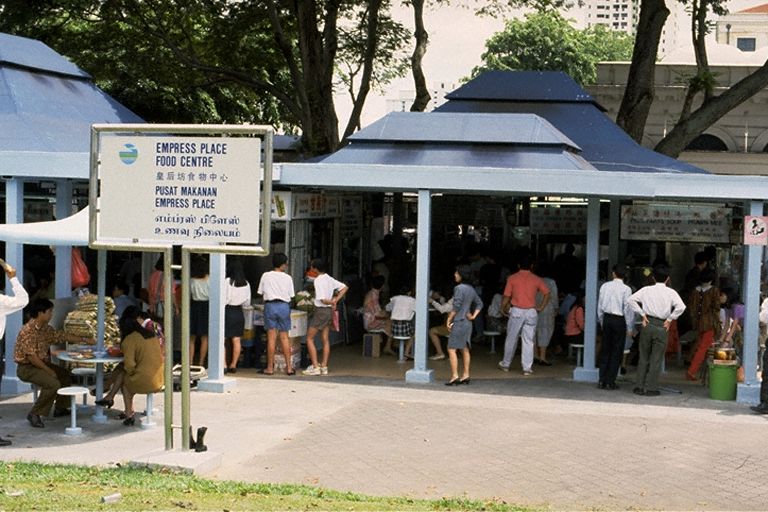
In 1972, the Ministry of Environment was form to take over the mammoth task of building new hawker centres and relocating street hawkers. By 1975, more than 15,000 licensed hawkers had been removed from the streets and housed in new hawker centres in areas such as Empress Place, Adam Road, Yeong Sheng Road, Upper Thomson Road, and Taman Jurong One and Two. As the ultimate aim was to relocate all remaining licensed street hawkers to hawker centres, which stood at a figure of about 29,000 in 1975, the Ministry announced that it would continue the effort to building more hawker centres. It even set the target to complete the resitting of street hawkers to hawker centres by the end of 1980s. The photograph above, taken in the 1980s, above shows the former Empress Place Food Centre located beside the current Asian Civilisation Museum. (Image Credit: Ministry of Information and the Arts Collection, courtesy of National Archives of Singapore (opens in new tab))
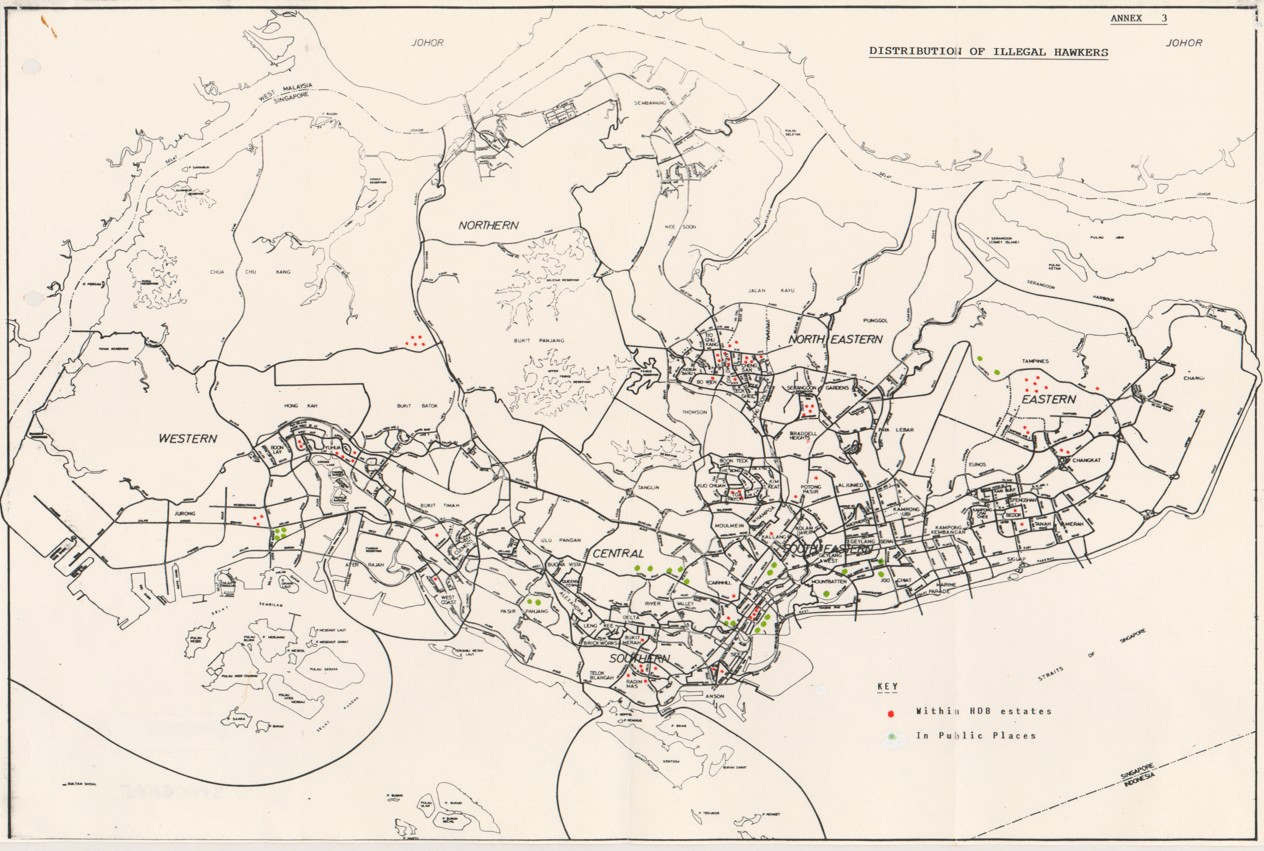
As hawkers would be provided with proper facilities such as clean water, electricity and piped gas, as well as daily cleaning, the Ministry of Environment saw their resitting as a very important task as it would safeguard public cleanliness and health. By placing hawkers in proper locations, health authorities were also able to conduct medical examination on hawkers regularly, thereby preventing the spread of infectious diseases such as typhoid and cholera. The resitting of street hawkers to hawker centres were successfully completed by early 1986 when the last group of some 80 street hawkers at China Square and Haw Par Villa were relocated. At the time, there were about 113 hawker centres across the island. Shown above is a 1987 map showing illegal hawking within Housing and Development Board estates and public places in Singapore. (Image Credit: Ministry of Sustainability and the Environment, courtesy of National Archives of Singapore (opens in new tab))
Hawkers form an important feature in our way of life. Given proper control hawking is, indeed, a social service as hawkers could play the important role of arresting unreasonable increases in food prices. I expect courteous service from hawkers at this centre. The use of obscene language should be a thing of the past or it will result in the cancelling of licenses.— Environment Parliamentary Secretary Chor Yeok Eng noted at the opening of Empress Place Food Centre on 3 September 1973 that hawker centres were also seen as a place where it could usher good social responsibilities and better etiquette between hawkers and diners.
Hawker Centres of the Nation-Building Years
During Singapore’s nation-building years from the 1960s to the 1980s, the development of purpose-built hawker centers was a crucial step in organising street food vendors and providing affordable, hygienic dining options for a rapidly growing population. These centers became not just places to eat, but also vital community spaces, reflecting the government’s commitment to both public health and social cohesion. Visit the story map below to see where are some of these hawker centres were located.
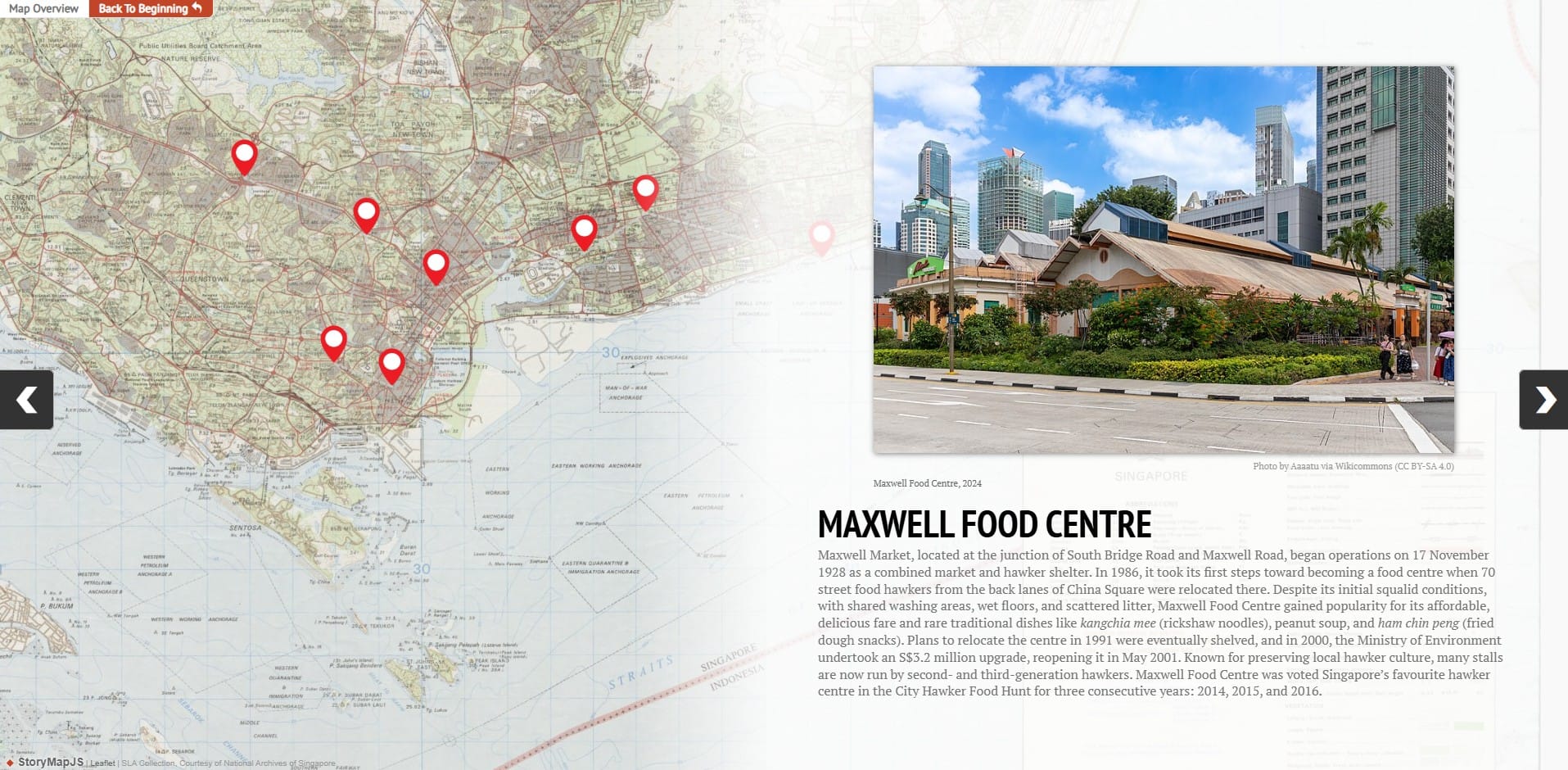
Click HERE (opens in new tab) to view the story map
From Streets to Stalls: Evolution of Singapore’s Hawker Culture
From makeshift roadside stalls to today’s iconic hawker centres, Singapore’s hawker culture has come a long way! The video below takes you on a bite-sized journey through time — from the chaotic hustle of early street hawkers to the creation of hawker shelters and the clean, bustling hawker centres we love today. Hear personal stories from veteran hawkers who lived the change, revisit historic markets and discover how food, policy and community came together to shape our nation’s vibrant hawker culture.

Renewing Hawker Centres
To enhance aging hawker centres and preserve Singapore’s hawker culture, the government introduced the Hawker Centres Upgrading Programme in 2001, focusing on improving facilities and heritage preservation. Efforts included renovations reflecting local history, such as East Coast Lagoon Food Village and Bedok Food Centre, as well as initiatives like training programmes, lower rentals, and succession schemes to support aspiring and retiring hawkers. More recently, modern hawker centres, such as Bukit Canberra, were built with eco-friendly features and improved infrastructure to serve both existing and new communities.
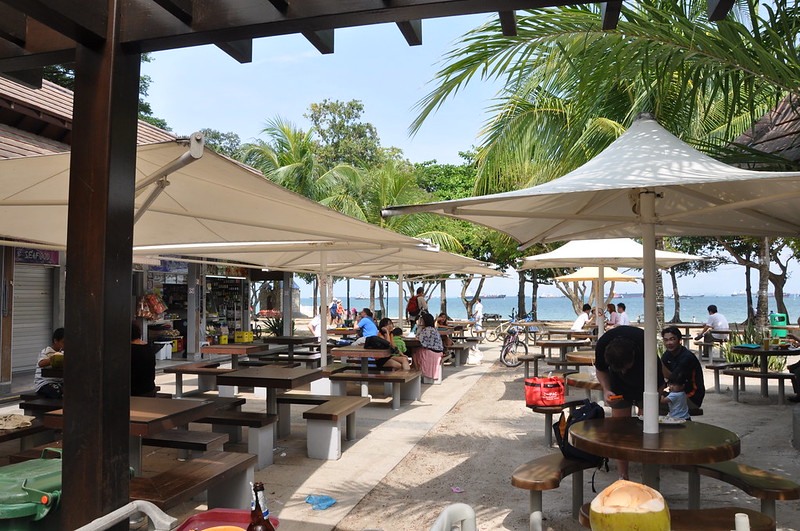
In an effort to improve the conditions and facilities of aging hawker centres and markets, the government launched the Hawker Centres Upgrading Programme in 2001. Led by the National Environment Agency, the programme included measures to ensure that hawker centres with significant heritage value underwent more extensive upgrades. For instance, the East Coast Lagoon Food Village was renovated in 2001 with a tropical theme featuring pavilions, gazebos, cabanas, open-sided structures, and tables set on sand to complement its seaside setting. By late 2013, this beachfront hawker centre had undergone another round of enhancements. Similarly, the Bedok Food Centre was redesigned to reflect the area’s Malay kampong heritage, incorporating Minangkabau-inspired roof architecture, outdoor landscaped restrooms, and lush vegetation. Other notable upgrades included Newton Food Centre and Tiong Bahru Market. Shown above is a 2010 photograph showing East Coast Lagoon Food Village. (Image Credit: Photo by PrettyKateMachine via Flickr (opens in new tab))
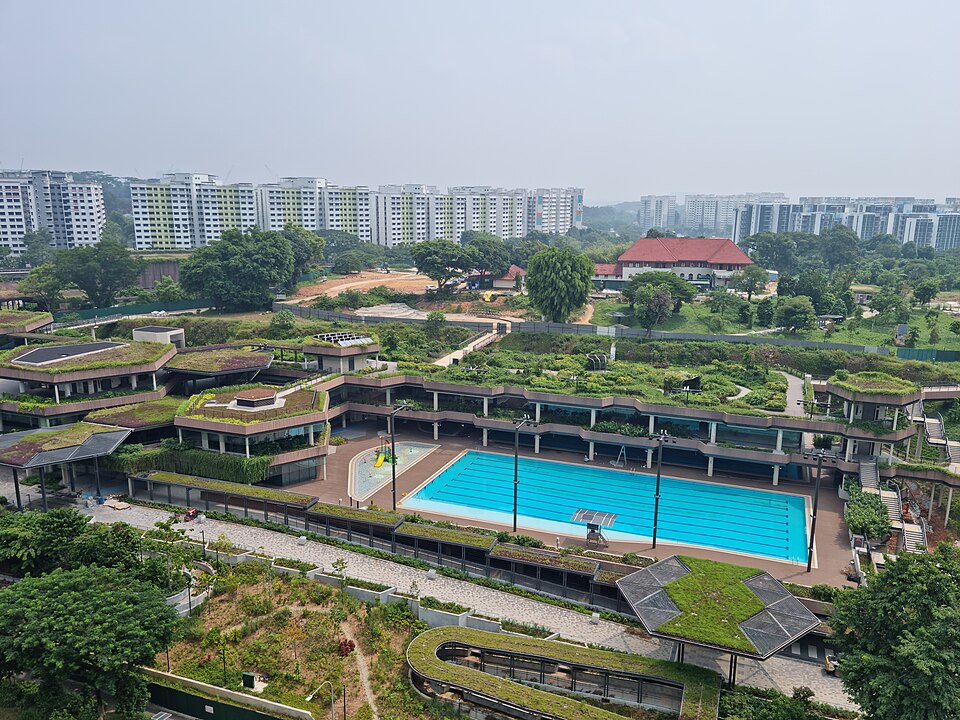
Besides upgrading existing hawker centres, the National Environment Agency announced in 2015 that it would be building at least 10 hawker centres in the next 12 years. These would be located in new estates such as Canberra, or in existing ones that are relatively under-served, such as Bidadari, Sengkang, Choa Chu Kang, Bukit Panjang and Bukit Batok. These newer hawker centres’ design and infrastructure was made more conducive for the environment, featuring bigger stall sizes, wider aisles and the availability of High Volume Low Speed fans to improve ventilation and keep the centres cool. Provision was also made for the adoption of automated equipment such as centralised dishwashing, automated tray return and food waste digester systems, as well as the integration of greenery and even recreational facilities. One example is Bukit Canberra Hawker Centre which is shown in the photograph above. Opened in 2021, it is covered in lush green and has a layout that is bright and airy. Furthermore, it is also connected to the Bukit Canberra Sports Centre which has a public swimming pool and indoor sports hall. (Image Credit: Photo by Jun Jie Yam via Wikicommons (opens in new tab))
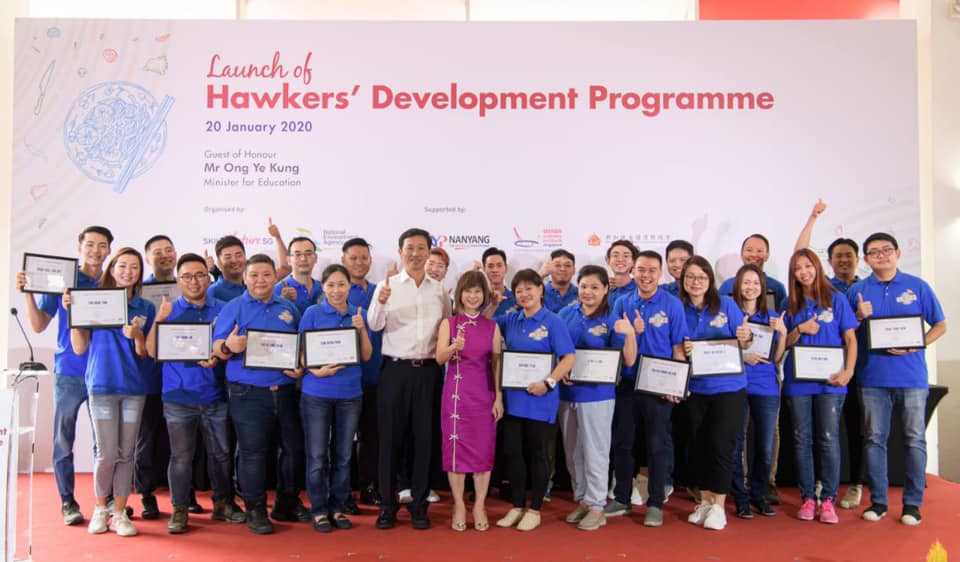
In addition to building new hawker centres, the government made significant efforts to preserve and sustain Singapore’s hawker culture. Initiatives included offering lower stall rentals to reduce costs for new hawkers starting out, encouraging veteran hawkers to impart their trade skills and knowledge, or passing it on to family members or relatives. In 2018, the National Environment Agency introduced the Incubation Stall Programme to support aspiring hawkers to start their hawker business with lower stall rentals in pre-fitted stalls. In 2020, the Hawkers’ Development Programme was launched to equip aspiring hawkers with the skills to run a hawker business. It combines training, apprenticeship, and mentorship to equip aspiring hawkers with the relevant skills to run a hawker business. Additionally, the Hawkers Succession Scheme was launched in 2022 to help retiring veteran hawkers who were intending to retire but unable to find successors among their family members or relatives, to pass on their skills, recipes, and stalls to aspiring hawkers. Shown here is then Minister for Education Ong Ye Kung and Senior Minister of State for Sustainability and the Environment Dr Amy Khor at the launch of the Hawkers’ Development Programme on 20 January 2020. (Image Credit: Ong Ye Kung Facebook page (opens in new tab))
NEA and MEWR have done a lot, to build new hawker centres, help moderate the cost of operating a hawker stall, and ensure that hawkers are treated fairly. But the skills to run a stall and serve 200 or 300 customers a day is quite different from serving up five friends at home with our own hokkien mee or bak kut teh. This is why we are launching the programme today. It does not make the hawker trade thrive overnight, but I think it will help in a meaningful way. We had launched similar programmes in the past…But none of these programmes gave the push needed by the hawker trade. Because the issue is not just a matter of teaching cooking skills. We need to address the deterrents of long hours, hard work, business risks, etc…The training component is straightforward – it will be delivered by Nanyang Polytechnic's Asian Culinary Institute…In addition, there will be a 2-month apprenticeship when aspiring hawkers will work with experienced hawkers in running their stalls. Following this is an incubation component, during which aspiring hawkers can obtain stalls through NEA and test the feasibility of their plans under the guidance of their mentors. They will also receive funding support for five months from SSG and NEA…This programme needs to translate the organic passion that exists for hawker food into greater participation in the hawker trade.— then Minister for Education Ong Ye Kung explained what the Hawkers’ Development Programme is trying to achieve at the launch of the Hawkers' Development Programme on 20 January 2020. (Source: Ministry of Education)
Curious to learn more about how the Hawkers' Development Programme supports aspiring hawkers?
Watch the video to hear from participants Ken Chew and Steven Goh as they share their journey through the programme and their experiences moving on to manage their own stalls!

Click the button below to continue or return to the previous page
References
Click the following PDF icon to view and download the reference list used for this page: Hawkers After Independence References [PDF, 593.76 KB] (opens in new tab)